
WOODSTOCK KETAMINE™️

Ketamine is a powerful dissociative anesthetic used in human and veterinary medicine that also has significant potential for abuse as a hallucinogen. Illicitly, it is commonly sold as a grainy white or off-white powder, often referred to by street names such as "Special K" or "Vitamin K".
Ketamine powder can be snorted, mixed into drinks, or "bombed" (swallowed in a cigarette paper). Medically, it is administered as an injection, or in a derivative form (esketamine) as a nasal spray for treatment-resistant depression.
Effects and Risks
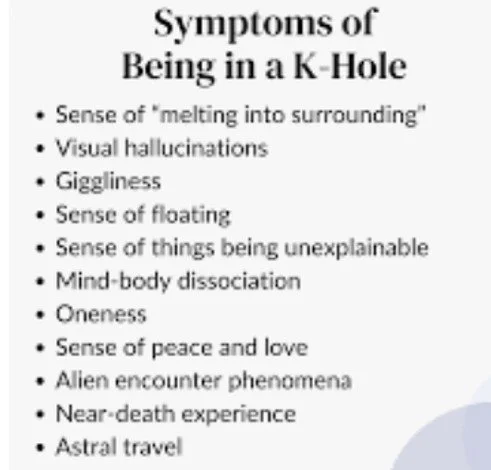
Ketamine works by distorting perceptions of sight and sound and can cause a feeling of detachment from one's body and environment, which is known as dissociation. At high doses, users may experience an intense "K-hole," an out-of-body, near-death experience that can be frightening.
Common effects and health risks include:
Physical Effects: Increased heart rate and blood pressure, impaired motor function, slurred speech, nausea, and potential respiratory problems at high doses.
Mental Effects: Hallucinations, confusion, memory loss, anxiety, depression, and in some cases, psychosis.
Long-Term Complications: Chronic, heavy use is associated with serious bladder and kidney problems (e.g., ulcerative cystitis, painful and frequent urination), as well as abdominal pain known as "K-cramps".
Vulnerability: Due to its ability to cause sedation and amnesia, ketamine has been used by predators to facilitate sexual assault.
The K-Hole Effect
A "k-hole" is how it feels when you take a high enough dose that both your environmental awareness and bodily control become very impaired. When someone has "fallen into a k-hole" (the slang term for this ketamine effect), they are temporarily unable to interact with others or the world around them
Legal Status
As of early 2026, ketamine remains federally legal for medical use in the U.S. as a Schedule III controlled substance. However, in 2025 and 2026, several states are tightening regulations around clinic operations, telemedicine, and the prescribing of at-home ketamine, creating a stricter patchwork of rules. [1, 2, 3, 4]
Key Legal Changes and Trends (2025-2026)
Texas: The Texas Medical Board proposed strict regulations for 2026 that would require on-site physicians for, set high-standard registration for clinics, and impose a complete ban on take-home "parental" (injectable/infusion) ketamine.
New York: Legislation has been proposed to tighten regulations, including Assembly Bill 2025-A7268, which addresses restrictions on emergency personnel administering substances like ketamine.
Oregon: The state recently passed S.B. 951, which introduces strict regulations on the "Friendly PC" model often used by telehealth ketamine companies.
Telehealth & At-Home Restrictions: Many states are increasing scrutiny on at-home, lozenge-based therapy, with some moving toward requiring in-person evaluations before prescribing.
State-by-State Regulatory Landscape
California: Allows ketamine therapy but holds clinics to high standards of practice; no specific "ketamine license" is required, but strict medical oversight is necessary.
Georgia: As of late 2025, the state has not implemented specific regulations for ketamine clinics, but the medical board advises that existing IV sedation rules apply.
Utah: Previously a strict outlier requiring registration for adverse events, the state's intensive monitoring ended in 2023, though strict standard medical oversight remains.
Washington: Follows typical rules requiring in-clinic administration or, if prescribed for home, adherence to strict quantity limits to avoid misdemeanor charges. [1, 2, 3, 4, 5]
General Legal Status
FDA Status: While approved as an anesthetic (1970) and for Esketamine/Spravato (2019), most mental health ketamine therapy is "off-label" but legal.
Clinic Requirements: Clinics must have licensed practitioners and, in many states, must store ketamine in secure, locked, and permanently fixed facilities.
Recreational Use: Illegal in all 50 states; possession without a prescription is a crime. [1, 2, 3, 4]
Disclaimer: Laws vary by state and are subject to change. Consult local regulations and a licensed professional for legal advice.